
A roof takes more punishment than almost any other part of a building. In Malaysia, that means constant UV exposure, sudden monsoon downpours, and daily heat cycling that expands and contracts every surface it touches. Without proper waterproofing, even a well-built concrete roof will eventually develop cracks, let water seep through, and cause damage that’s far more expensive to fix than the waterproofing itself would have cost.
If you’re researching roof waterproofing — whether for a new build, a renovation, or because you’ve already spotted a leak — here’s what you actually need to know before choosing a system or a contractor.
Why Roofs Need Waterproofing in the First Place
Concrete and metal roofs are not inherently waterproof on their own. Concrete is porous and develops hairline cracks over time as the structure moves and ages; metal roofing has seams, fasteners, and flashing points where water can work its way in. Left untreated, water infiltration leads to:
- Interior ceiling stains, mould, and peeling paint
- Corrosion of reinforcement steel inside concrete slabs, weakening the structure over time
- Reduced insulation performance, which drives up cooling costs
- Costly interior repairs that far exceed the price of proper waterproofing upfront
Roof waterproofing isn’t a cosmetic add-on — it’s structural protection.
Roof Waterproofing Systems: Which One Fits Your Roof?
Different roof types and use cases call for different systems. The three most common approaches for roofs in Malaysia are:
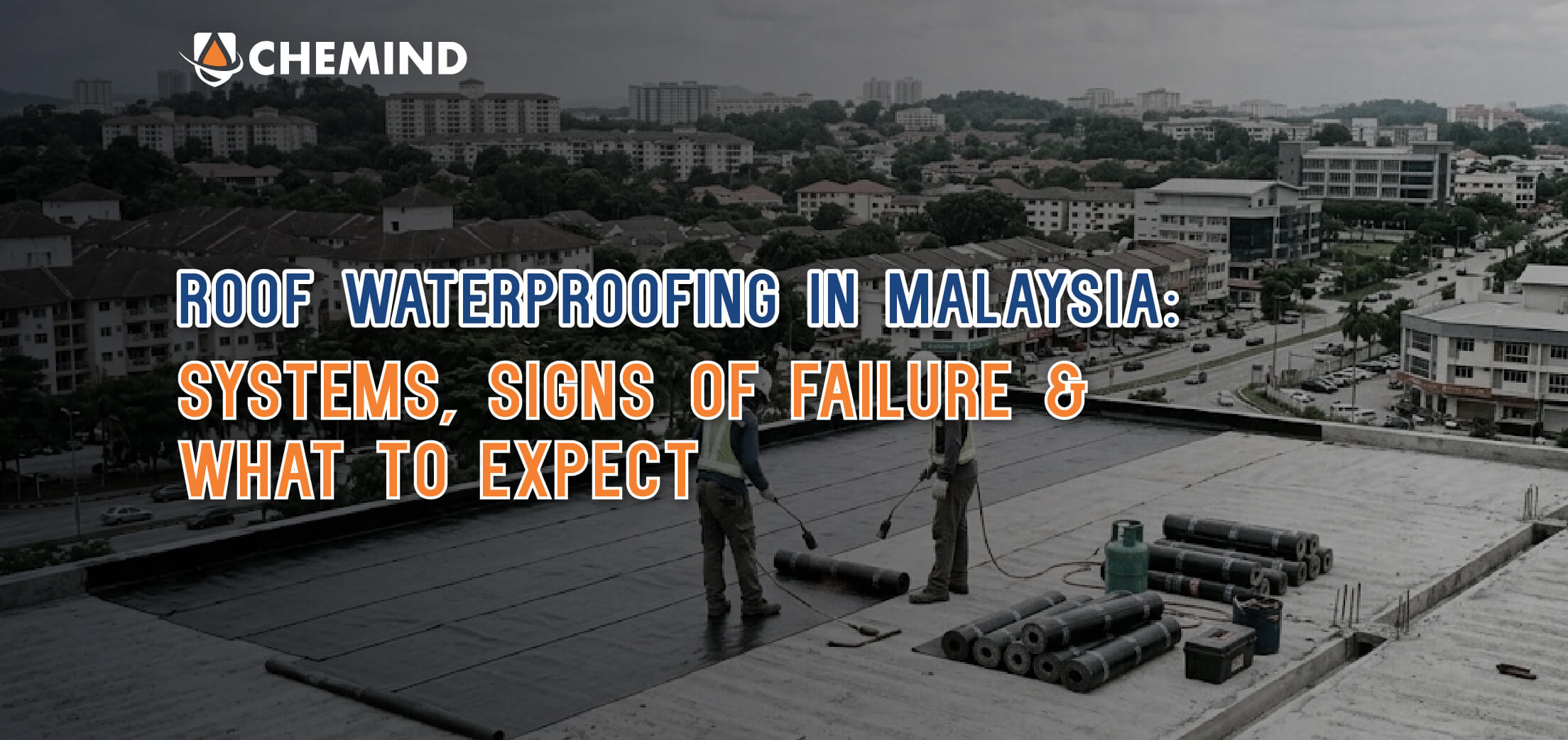
Torch-on membrane — a bitumen-based sheet membrane heat-fused directly onto the roof surface. It’s a proven, durable option for large, flat roof decks and podium slabs, and remains one of the most widely used systems for commercial and residential roofing projects. See our full torch-on vs liquid membrane comparison for a detailed breakdown of where each performs best.
Liquid-applied membrane — a rolled or sprayed coating that cures into a seamless waterproof layer. It’s particularly useful for roofs with complex detailing — pipe penetrations, upstands, and irregular shapes — where a sheet membrane would need extensive cutting and patching to seal properly.
Polyurethane roof coatings — systems like Chemind’s Duracote HB go beyond basic waterproofing, adding a high-gloss, anti-skid, UV-resistant surface with a Class “0” fire rating — well suited to exposed reinforced concrete roofs, walkways, and access decks that see regular foot traffic.
Many roofs actually benefit from a combination — a primary waterproofing membrane for the main deck, paired with a protective topcoat in high-traffic or highly exposed areas.
Signs Your Roof Needs Waterproofing (or Re-Waterproofing)
Roof waterproofing doesn’t last forever, and even a well-installed system needs attention as it ages. Watch for:
- Visible ponding water that doesn’t drain within 24–48 hours after rain
- Hairline cracks or blistering on the roof surface
- Interior ceiling stains, especially ones that appear or worsen after heavy rain
- A roof coating that’s over 10–15 years old, even if no visible damage is apparent yet
- Peeling, flaking, or chalking on an existing coated surface
Catching these signs early usually means a straightforward re-coating job. Ignoring them tends to mean a full membrane replacement — and interior repairs on top of that.
What Does Roof Waterproofing Cost?
Cost depends on the roof’s size, the system chosen, and how much surface preparation is needed — a roof with existing cracks or old, failing coating will need more prep work than a clean new concrete deck. As a general rule, torch-on and polyurethane coating systems tend to be more cost-effective for large, flat areas, while liquid-applied systems can cost more per square metre but save on labour where detailing is heavy. Getting a proper site assessment is the only reliable way to get an accurate number — roof condition varies a lot between buildings, even ones that look similar from the ground.
What a Proper Roof Waterproofing Job Involves
A job done right isn’t just “apply a coating and leave.” It should include:
- Inspection — identifying existing damage, ponding areas, and the roof’s current condition
- Surface preparation — cleaning, crack repair, and priming before any membrane or coating goes on
- System application — installed to the manufacturer’s specified thickness and coverage, not rushed
- Curing time — allowing the system to properly cure before it’s exposed to foot traffic or rain
- Warranty — a written warranty covering materials and workmanship, not a verbal promise
Work With an Experienced Roof Waterproofing Specialist
Chemind Industries has supplied and installed waterproofing systems across residential, commercial, and industrial roofs in Malaysia since 1986. We assess each roof individually — its shape, exposure, traffic, and condition — before recommending a system, rather than applying the same solution to every job.
If you’re dealing with an existing leak, planning a new roof, or simply due for a re-coating, getting the system and preparation right the first time is what determines whether your roof stays protected for the next 15–20 years or needs redoing in two.
Contact Chemind for a free roof assessment and quote — we’ll walk you through the right system for your specific roof, with a clear written scope before any work begins.