

In waterproofing, most project discussions focus heavily on membrane specifications, thickness, elasticity, or brand selection. While these factors are important, one critical element is often underestimated during design and construction — slope and gradient.
No waterproofing membrane is designed to permanently withstand excessive ponding water.
In many roofing, podium deck, balcony, and wet area failures, the real issue is not necessarily the membrane itself, but poor falls and inadequate drainage design that allow water to remain trapped on the surface for prolonged periods.
At Chemind Industries, we believe waterproofing performance depends on both the membrane system and the effectiveness of water management design. Proper slope and drainage planning are essential to ensuring long-term waterproofing durability, especially in Malaysia’s tropical climate with frequent heavy rainfall.
This article explores common industry mistakes related to slope and gradient waterproofing and explains why falls matter just as much as the waterproofing membrane itself.
Why Slope Matters in Waterproofing
Waterproofing systems are designed to resist moistures penetration, but they perform best when water is directed away efficiently.
When surfaces are flat or improperly sloped, water begin to pond. Over time, standing water increases stress on the waterproofing system and accelerates deterioration.
Common risks caused by insufficient slope include:
- Ponding water
- Membrane blistering
- Delamination
- Dirt accumulation
- UV concentration damage
- Concrete deterioration
- Algae and mould growth
- Leakage through weak points
This is especially critical for:
- Flat roofs
- Podium decks
- Balconies
- Gutters
- Wet areas
- Car park decks
- Planter boxes
In tropical environments like Malaysia, frequent rainfall makes proper drainage even more important for long-term waterproofing performance.
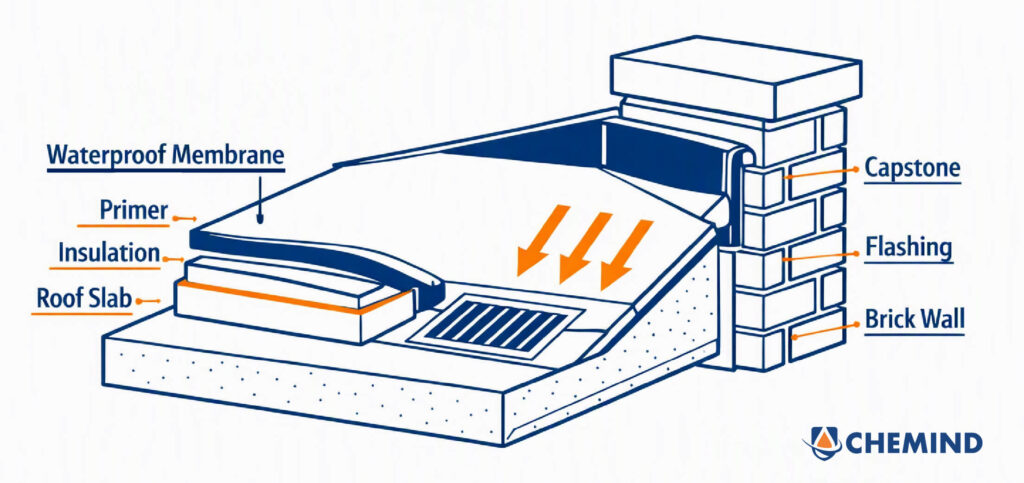
What Engineers and Contractors Often Get Wrong
1. Assuming Waterproofing Alone Can Handle Ponding Water
One of the biggest misconceptions in construction is believing that a high-performance membrane can compensate for poor drainage design.
While modern waterproofing membranes are highly durable, continuous water ponding significantly reduces their lifespan.
Long-term standing water can cause:
- Premature membrane aging
- Increased hydrostatic pressure
- Joint deterioration
- Adhesion loss
- Surface cracking
- Water migration through detailing points
Waterproofing systems are always recommended together with proper slope design to minimize prolonged water exposure.
2. Inadequate Falls Toward Drainage Points
Many leakage problems occur because surfaces lack sufficient gradient toward floor traps, gutters, or drainage outlets.
In practice, improper falls may result from:
- Poor screed workmanship
- Uneven substrate preparation
- Incorrect leveling
- Design coordination issues
- Settlement over time
Even minor depressions can create localized ponding areas that continuously stress the waterproofing layer.
For roof slabs and exposed decks, proper drainage planning should be considered during early structural and architectural coordination.
Recommended Waterproofing Falls and Gradients
Different waterproofing applications typically require different slope recommendations depending on exposure conditions and usage requirements.
General industry recommendations include:
| Area | Recommended Minimum Fall |
| Flat roofs | 1:100 to 1:80 |
| Podium decks | 1:100 |
| Balconies | 1:80 |
| Wet areas | 1:60 to 1:80 |
| Gutters | 1:200 minimum |
The actual gradient requirement may vary depending on project specifications, drainage layout, and surface finish selection.
Why Ponding Water Is Dangerous for Waterproofing Systems
Many people assume waterproofing membranes fail only when punctured or cracked. However, prolonged ponding water creates continuous stress that gradually weakens even high-quality systems.
Common effects include:
Increased Hydrostatic Pressure
Standing water continuously pushes against waterproofing layers and weak detailing points.
Accelerated UV Degradation
Water accumulation can intensify heat exposure and surface deterioration.
Biological Growth
Ponding areas encourage algae, mould, and bacterial growth that may affect surface integrity and aesthetics.
Dirt and Debris Accumulation
Blocked drainage outlets worsen water retention and increase maintenance issues.
Slope Design Is Part of Waterproofing Design
One of the biggest industry mistakes is separating waterproofing specification from drainage planning.
Successful waterproofing performance requires integration between:
- Structural design
- Architectural detailing
- Drainage planning
- Waterproofing system selection
- Surface finishing
- Expansion joint detailing
Without proper coordination, even premium waterproofing membranes may fail prematurely.
Waterproofing recommendations are based not only on membrane selection, but also on substrate condition, exposure environment, drainage efficiency, and long-term maintenance considerations.
Areas Most Vulnerable to Poor Falls
Flat Roof Waterproofing
Flat roofs are among the most common areas for ponding water issues due to large exposed surfaces and drainage dependency.
Podium Deck Waterproofing
Podium decks often experience heavy rainfall exposure combined with pedestrian or vehicular traffic.
Balcony Waterproofing
Small balcony areas frequently suffer from poor floor trap positioning and insufficient slope.
Wet Area Waterproofing
Bathrooms and wet areas require proper falls to prevent water accumulation around corners and floor junctions.
Gutter Waterproofing
Improper gutter gradients can cause overflow, leakage, and structural staining.
Best Practices for Slope & Gradient Waterproofing
To improve waterproofing performance, project teams should consider:
Early Drainage Planning
Drainage outlets and slope directions should be finalized during design development.
Proper Screed Workmanship
Uneven screed surfaces often create hidden ponding zones.
Drainage Testing Before Waterproofing
Flood testing helps identify water accumulation areas before membrane installation.
Regular Maintenance
Blocked drains and gutters significantly reduce waterproofing effectiveness.
Compatible Waterproofing Systems
Select waterproofing materials suitable for the expected exposure and movement conditions.
Frequently Asked Questions About Slope & Waterproofing
At Chemind Industries, we are committed to providing high-quality waterproofing products and ensuring that our customers achieve the best results. By avoiding these common mistakes when applying torch-on membrane, you can ensure a durable, effective, and long-lasting waterproofing solution. For more tips and advice on waterproofing, feel free to contact our expert team or visit our website. Happy waterproofing!
Why Is Slope Important in Waterproofing?
Slope helps direct water toward drainage outlets efficiently, reducing ponding water and minimizing stress on waterproofing membranes. Without proper falls, standing water may accelerate waterproofing deterioration and increase leakage risks.
Can Waterproofing Membranes Handle Ponding Water?
Most waterproofing membranes can tolerate temporary ponding water, but continuous standing water significantly shortens system lifespan and increases failure risk over time. Proper drainage design remains essential even when using high-performance waterproofing systems.
What Is the Recommended Slope for Flat Roof Waterproofing?
Flat roofs generally require a minimum slope between 1:100 and 1:80 depending on project requirements and drainage layout. The objective is to ensure efficient water flow toward drainage outlets.
Why Do Flat Roofs Leak Even with Waterproofing?
Flat roofs often leak because of:
- Poor falls
- Ponding water
- Blocked drainage outlets
- Improper detailing
- Membrane deterioration
- Movement-related cracking
In many cases, drainage design contributes as much to leakage risk as the waterproofing membrane itself.
How Does Chemind Industries Support Waterproofing Performance?
Chemind Industries provides waterproofing systems designed for long-term durability, compatibility, and environmental resistance. Our approach considers both membrane performance and practical site conditions such as drainage efficiency, movement, substrate condition, and weather exposure.
Conclusion
Waterproofing performance is not determined by membranes alone.
Proper slope and gradient design play a critical role in ensuring water is removed efficiently before it can create long-term stress on the waterproofing system.
Many waterproofing failures in roofs, podium decks, balconies, and wet areas occur not because the membrane is defective, but because poor falls allow water to remain trapped on the surface.
At Chemind Industries, we believe effective waterproofing requires a complete system approach — combining high-quality waterproofing materials with proper drainage design, detailing, and installation practices for long-term building protection.