

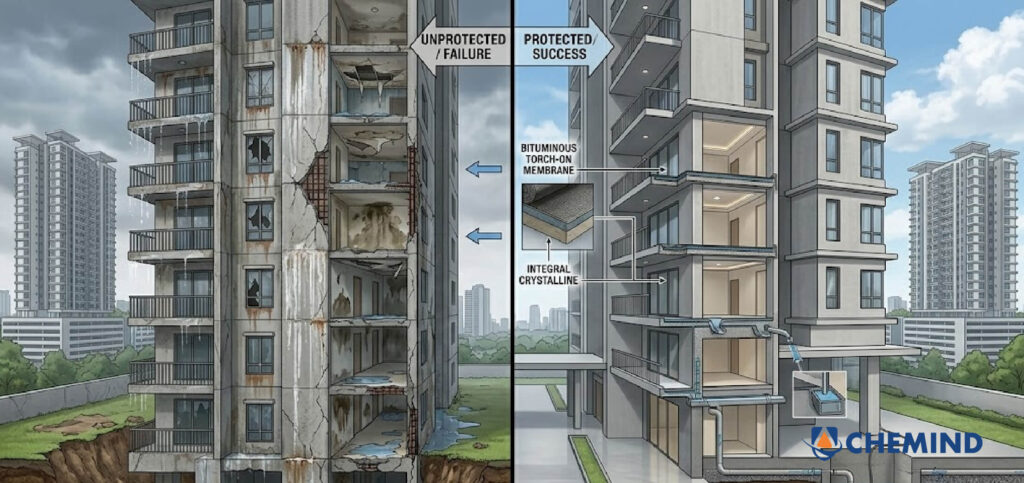
Waterproofing is one of those line items in a construction budget that is easy to underestimate — until something goes wrong. For property developers in Malaysia, a waterproofing failure is not just a technical problem. It is a liability issue, a reputational risk, and in many cases, a very expensive remedial programme that could have been avoided with better specification at the outset.
The right waterproofing system is not necessarily the cheapest one, nor is it always the one your contractor is most familiar with. Here are five questions that every developer should be asking before a waterproofing system is specified on their project.
1. Is this system proven in Malaysian conditions?
This sounds obvious, but it is frequently overlooked. A product may perform well in a temperate European climate and carry impressive international certifications — and still underperform in Malaysia’s equatorial environment.
Malaysian conditions are demanding: high UV radiation, sustained heat, intense rainfall, high ambient humidity, and biological growth from moss and algae. A waterproofing system specified for your project should have a track record in this climate. Ask for local references. Ask whether the product has been tested to relevant standards under tropical conditions. If the answer is vague, keep asking.
2. What is the total system cost — not just the material cost?
Developers are often presented with material costs during the specification phase, but the total cost of a waterproofing system includes more than the membrane itself. Factor in:
- Substrate preparation (grinding, priming, crack repair)
- Labour for application — some systems are more labour-intensive than others
- Protection layers or wearing courses above the membrane
- Inspection and testing
- Any warranties — and what they actually cover
A cheaper membrane with higher installation complexity may cost more in total than a premium product that is faster to apply. Compare systems on a total installed cost basis, not just material price per square metre.
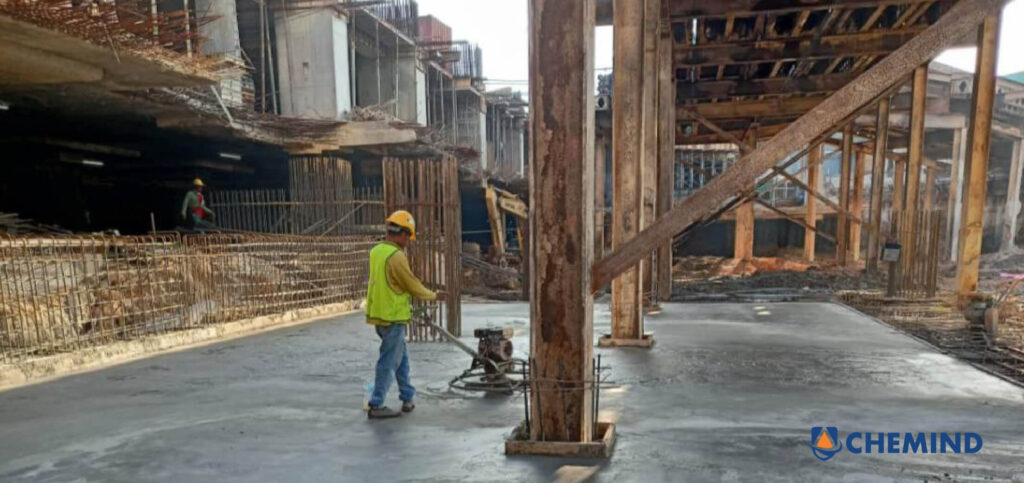
3. Who is applying it — and are they trained to do so?
The best waterproofing system in the world will fail if it is applied incorrectly. In Malaysia, the quality of waterproofing application varies significantly across contractors. Ask:
- Is the applicator trained and approved by the product manufacturer?
- Have they used this specific system before?
- Can they provide references from comparable projects?
Many waterproofing manufacturers — including Chemind Industries — offer technical support and site supervision to ensure correct application. This is worth factoring into your contractor selection process.
4. What happens when it fails — and who is responsible?
No waterproofing system lasts forever, and not every installation goes perfectly. Before specifying a system, understand:
- What warranty does the manufacturer provide, and under what conditions is it valid?
- Does the warranty cover materials only, or materials and labour for remediation?
- Is there a requirement for the product to be applied by an approved contractor for the warranty to be valid?
- What is the dispute resolution process if a failure occurs?
A well-structured warranty from a manufacturer with a local technical team is worth significantly more than a warranty from a supplier with no presence in Malaysia.
5. How does this system perform over the full life cycle of the building?
Developers often think in terms of project completion — but the waterproofing system will need to perform for the full life of the structure. Ask:
- What is the expected service life of this system under Malaysian conditions?
- Is it maintainable? Can it be inspected, repaired, or re-coated without full removal?
- What is the cost of remediation if it fails at year 5 versus year 15?
A system with a lower upfront cost but a shorter service life may generate remedial costs that far exceed the initial saving. Factor in the cost of disruption to building occupants — particularly for commercial or industrial developments where downtime has a direct financial impact.
The Bottom Line
Waterproofing specification is a technical decision with long-term financial consequences. It deserves the same rigour as any other major element of your building envelope. Engaging with a manufacturer’s technical team early in the design process — before contractor pricing — gives you the best chance of specifying the right system for your project’s specific conditions and requirements.
Chemind Industries works directly with developers, architects, and M&E consultants across Malaysia to support waterproofing specification from concept through to completion. Contact our team to discuss your next project.