

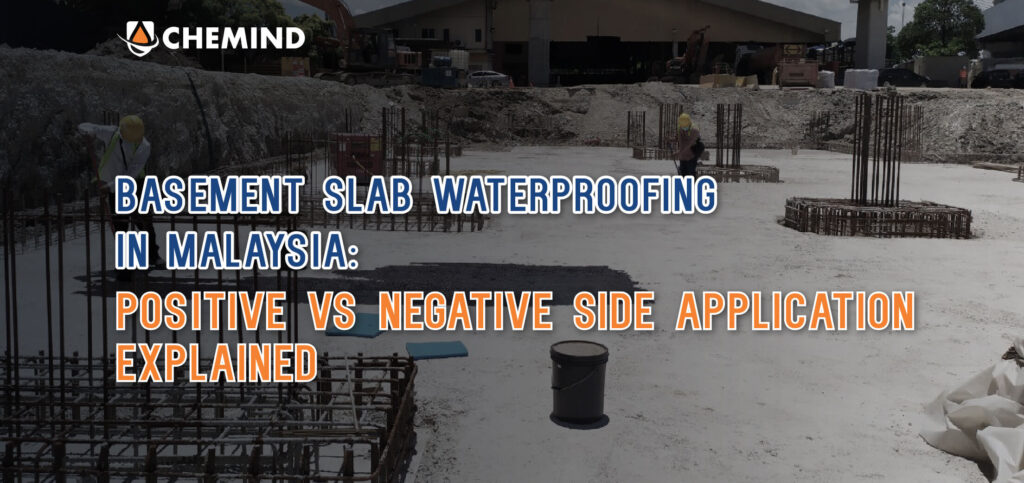
Basement waterproofing is one of the most technically demanding aspects of building construction in Malaysia. With a high water table in many parts of the country, heavy seasonal rainfall, and the increasing prevalence of deep basement construction in urban developments, getting the waterproofing system right is critical — not just for building performance, but for long-term structural integrity.
One of the most fundamental decisions in basement waterproofing specification is the choice between positive side and negative side application. Understanding the difference — and knowing when each approach is appropriate — is essential for engineers, architects, and developers.
What is Positive Side Waterproofing?
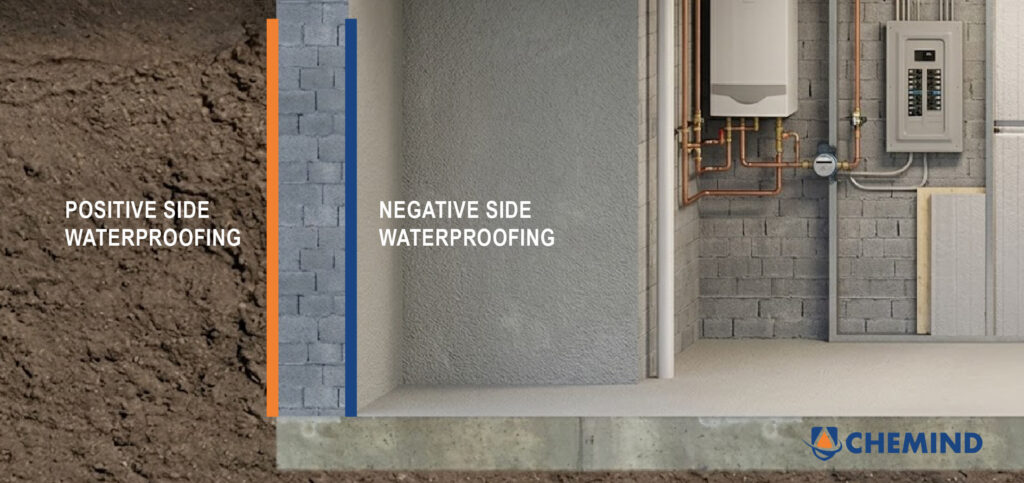
Positive side waterproofing is applied to the face of the structure that is exposed to water — in other words, the external face of the basement wall or the underside of the slab, facing the soil.
This is widely considered the superior approach because the waterproofing membrane works with hydrostatic pressure, not against it. Water pushing against the structure pushes the membrane into the substrate, maintaining the seal. The waterproofing layer also protects the concrete and reinforcement from moisture and chemical attack from the ground.
Positive side waterproofing is the standard approach for new-build basement construction, where the external face of the structure is accessible before backfilling.
Advantages of positive side application:
- Works with hydrostatic pressure
- Protects the concrete structure from water and chemical attack
- Easier to inspect and test before backfilling
- Wide range of membrane types available
Limitations:
- Access to the external face is required — not always possible in existing structures or confined sites
What is Negative Side Waterproofing?
Negative side waterproofing is applied to the internal face of the structure — the dry side, away from the water source. The membrane must therefore resist hydrostatic pressure pushing against it from behind.
This approach is typically used as a remedial measure when positive side access is not available — for example, in existing basements where water ingress has been identified after construction.
Not all waterproofing products are suitable for negative side application. The product must be specifically formulated to resist the hydrostatic pressure of water pushing through the substrate from behind.
Advantages of negative side application:
- Can be applied from inside the structure — no external excavation required
- Suitable for remedial works on existing basements
- Often faster and less disruptive to execute
Limitations:
- Does not protect the concrete or reinforcement from water and chemical attack
- The membrane must resist hydrostatic pressure — lower-performance products will fail
- Long-term durability is generally lower than positive side systems

Choosing the Right System for Malaysian Conditions
Malaysia’s geology and climate create specific challenges for basement waterproofing:
- High water table in low-lying areas — particularly in Kuala Lumpur, the Klang Valley, and coastal developments — means basement structures are often subject to sustained hydrostatic pressure
- Aggressive soils in some areas contain sulphates and chlorides that attack unprotected concrete
- Seasonal groundwater fluctuations mean water pressure against the slab and walls can increase significantly during the monsoon season
For new construction, a positive side waterproofing system should always be the primary specification. For remedial or retrofit situations, a carefully selected negative side system — applied by a competent contractor — can provide effective protection where external access is not possible.
A Note on System Integration
Regardless of which side the waterproofing is applied from, the performance of the system depends on continuity. The slab, walls, kicker, and all penetrations must form a single, unbroken waterproofing envelope. Junctions and construction joints are consistently the weakest points in any basement waterproofing system — and they deserve as much attention as the open field of the membrane.
Chemind Industries’ technical team supports basement waterproofing projects across Malaysia from specification through to installation. Contact us to discuss the right system for your project.