


A product data sheet — often called a TDS or Technical Data Sheet — is the most important document a specifier or engineer will reference when selecting a waterproofing product. It contains the technical properties, performance characteristics, and application instructions that determine whether a product is fit for purpose on a given project.
Yet in practice, data sheets are frequently misread, misunderstood, or simply skimmed without a full appreciation of what the numbers mean. This guide walks through the key sections of a waterproofing TDS — and explains what to look for, and why it matters.
1. Product Description and Chemistry
The first section of any data sheet describes what the product actually is — its chemistry, form, and intended application. Common waterproofing chemistries include:
- Polyurethane (PU) — flexible, excellent elongation, suited to dynamic substrates and exposed applications
- Cementitious crystalline — penetrating, becomes part of the concrete, suited to below-grade and wet-area applications
- Bituminous — modified asphalt-based, cost-effective, available in sheet or liquid form
- Epoxy — rigid, chemical-resistant, suited to water-retaining structures and tanks
- PVC / TPO membrane — single-ply sheet systems, suited to large flat roof areas
Understanding the chemistry tells you immediately whether the product is appropriate for your application. A rigid epoxy coating, for example, is not suited to a roof subject to thermal movement.
2. Physical Properties
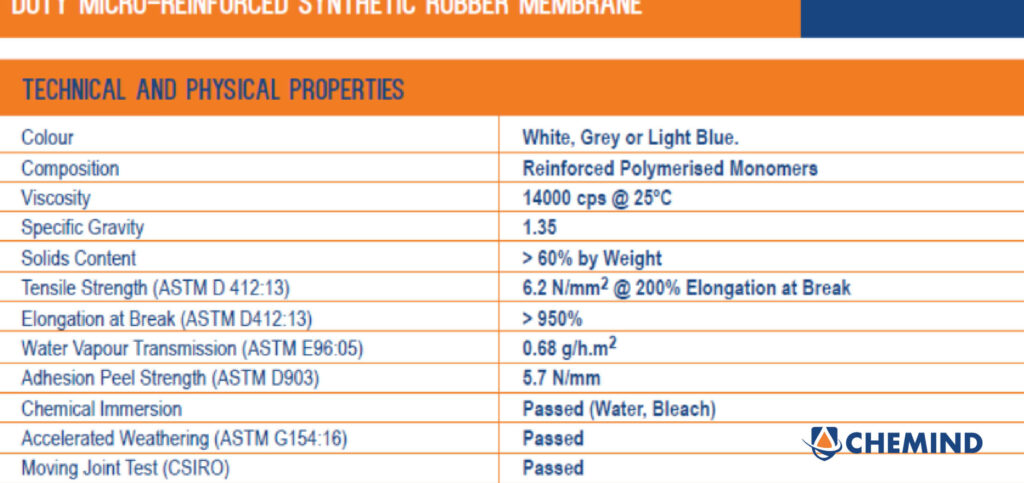
This is where most engineers spend the majority of their time — and rightly so. Key physical properties to examine include:
Elongation at Break (%) Expressed as a percentage, this tells you how much the membrane can stretch before it fails. For flat roofs and bridge decks subject to movement, a minimum elongation of 150–200% is generally recommended. Higher is better for dynamic applications.
Tensile Strength This measures the force required to tear the membrane. A higher tensile strength indicates better resistance to mechanical damage during and after installation.
Water Vapour Transmission (WVT) This indicates how much water vapour the membrane allows to pass through it. For below-grade or internal wet-area applications, a low WVT value is important. For roofing applications in hot climates, some degree of vapour permeability can help prevent blistering.
Crack Bridging Ability Some data sheets specify the maximum crack width the membrane can span without failure. This is critical for bridge decks, concrete roofs, and any substrate prone to cracking.
3. Application Data
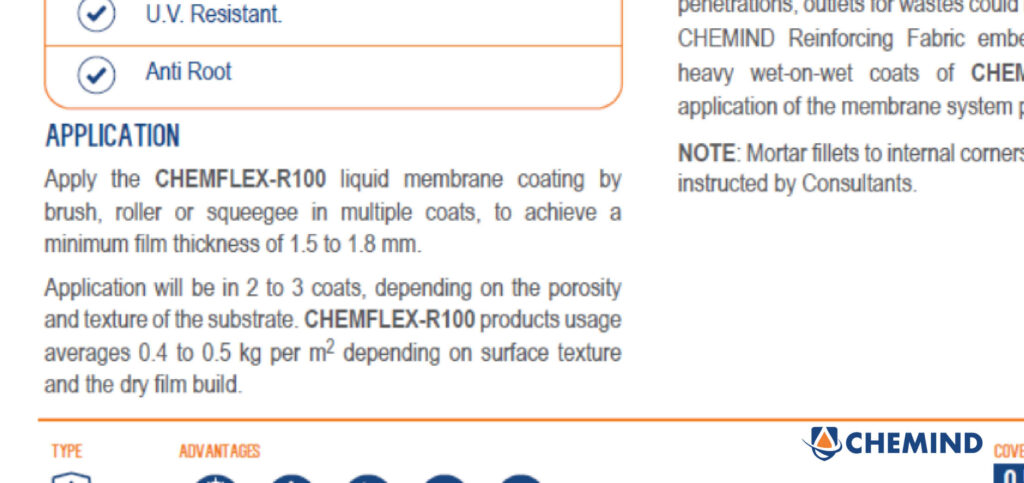
This section tells you how the product is applied — and where most site problems originate when it is not read carefully enough.
Substrate Requirements Most data sheets specify minimum substrate strength, surface preparation standard (e.g., CSP 3 or equivalent), and moisture tolerance. Applying a product to a substrate that does not meet these requirements is a common cause of adhesion failure.
Application Temperature and Humidity In Malaysia’s climate, this section deserves particular attention. Many products have maximum humidity thresholds — applying them in high-humidity conditions can affect cure rate and adhesion. Check whether the product is suited to the ambient conditions on your site.
Coverage Rate Expressed in m²/kg or m²/litre, this determines how much material is required per square metre of substrate. Always apply at the specified rate — under-application is a false economy that leads to performance failure.
Pot Life and Cure Time Two-component systems have a limited pot life once mixed. Exceeding this results in a product that cannot be applied correctly. Ensure applicators understand this and are working in appropriately sized batches.
4. Compatibility and System Information
A data sheet may specify which primer, topcoat, or protection layer the product is compatible with. Never mix components from different manufacturers without written confirmation of compatibility — incompatible systems can delaminate or fail to cure correctly.
5. Certifications and Standards
Look for references to testing standards — such as EN, ASTM, or MS standards — under which the stated properties were measured. A product that quotes elongation without reference to a test standard cannot be compared fairly to one that specifies ASTM D412 or EN 14891.
For Malaysia, look for products with local SIRIM certification where applicable, and for building applications, products compatible with Malaysian building code requirements.
What a Data Sheet Cannot Tell You
A data sheet reflects laboratory performance under controlled conditions. Site conditions — substrate quality, ambient temperature, applicator skill — all affect real-world performance. Use the data sheet as a starting point, not the final word. Engage with the manufacturer’s technical team to confirm suitability for your specific project conditions.